r/ECE • u/hashi_kun • 2d ago
Hardware Circuits
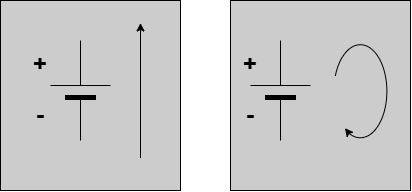
I always keep getting confused with calculation of voltage drops when solving circuits or reading schematics. When using KVL, I keep getting the sign convention wrong. Can someone help me with this?
4
u/AstuteCouch87 2d ago
The sign convention my classes used was a drop in voltage is positive and a gain in voltage is negative. i.e. going from the positive to negative terminal of a 12V battery would be +12V. Although the actual convention you pick doesnt matter as long as youre consistent
2
u/Chanesaw_tm 11h ago
I simply use the convention that positive current is always + to - voltage (the opposite of your pic on the left). I do not change this from component to component
If you have a positive current you have a positive power meaning that the device consumes power
If you have a negative current you have a negative power meaning that the device generates power
If you use the opposite convention then everything is flipped.
1
u/Egg1Salad 1d ago
You just need to use the numbers with some awareness off the direction of power.
For example, a resistor RECIEVES energy, and we'd say it has a positive voltage applied to it and it draws a positive current, so +V x +I = +P, positive power. But from the point of view of the battery, or power supply, it is SUPPLYING energy, so it has a positive voltage, but from it's perspective the current is negative, flowing away from the source. So you'd have +V x -I = -P.
All of that relies on the assumption that we use conventional current.
0
u/Rararror 1d ago
Power supplies : +current exits from +pin (out arrow) Loads: +current enters +pin (in arrow)
(+pin potential) - (-pin potential) = positive voltage
4
u/AnalogRFIC_Wizard 1d ago
There are two conventions:
Passive convention: voltage drop and current have the same direction.
Active convention: voltage drop and current have opposite directions.
It doesn't matter which one you choose as long as you are consistent with it through the whole circuit analysis. I would however check which convention is used in your course. What is usually done is to use passive convention on passive elements (R,L,C) and active convention on sources (like in your image). The reason for this is that if you used passive convention on all circuit elements you would get positive powers on the elements that receive power (the passive elements ALWAYS receive power) and negative powers on the elements that give power (usually sources, but when you have multiple sources it could be that not all of them are giving power). By switching to active convention in sources you will have only positive powers.
What matters is that the law of energy conservation should still hold. If you use only passive convention, the sum of the powers of all circuit elements should add up to zero. If you use passive convention for RLC components and active convention for sources, then the sum of all passive convention powers should be equal to the sum of all active convention powers. It is a good way to understand if you messed up or not during your calculations once you are done calculating all currents and voltages.